INDUSTRY INSIGHT: Powering the Global Print on Demand Community with Pixel Perfect Precision and Purpose
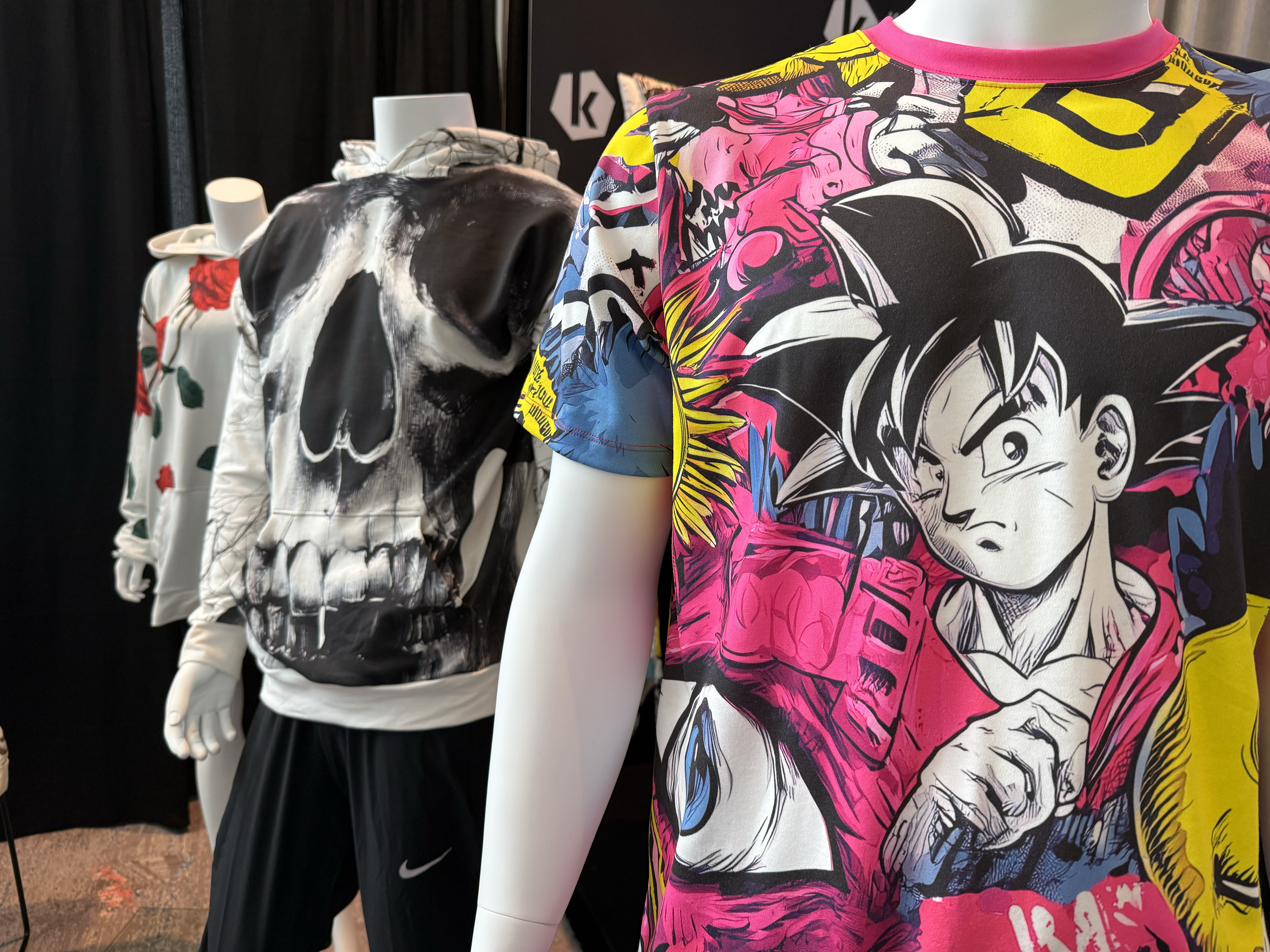
The apparel decoration industry is decisively moving away from isolated, analogue production tools toward connected digital manufacturing environments.
"Kornit’s unwavering commitment to transformative technology continues to disrupt the status quo. For business leaders and innovators ready to capture the future of apparel manufacturing, the path forward is clear”
The textile markets demand for agility, sustainability, and personalised merchandise at any volume, is forcing manufacturers to rethink their entire production lines. Digital technology offers the fundamental operating system for efficient, profitable production.
Against this backdrop of rapid change, industry leaders recently gathered at Kornit Konnections 2026 in Hollywood, Florida. This exclusive summit brought together global brands, innovative printers, and supply chain disruptors to address pressing industry challenges. The event highlighted how technical innovation can harmonise profitability with ecological responsibility, proving that agile, on-demand digital production is the new standard for success.
Community and collaboration are central to this success. Cutting-edge digital platforms are empowering a multi-billion dollar worldwide industry. The most recent technical launches from Kornit Digital for garment decoration, technical textiles, and footwear - each demonstrate how businesses can capture new commercial opportunities while drastically reducing their environmental footprint.
Scaling Garment Decoration for a Global Market
The sheer scale of innovation in the print on demand sector is staggering. Recent live interviews and video interviews from Kornit Konnections provided a clear window into how leading contract printers are leveraging digital ecosystems to build highly profitable, scalable operations.
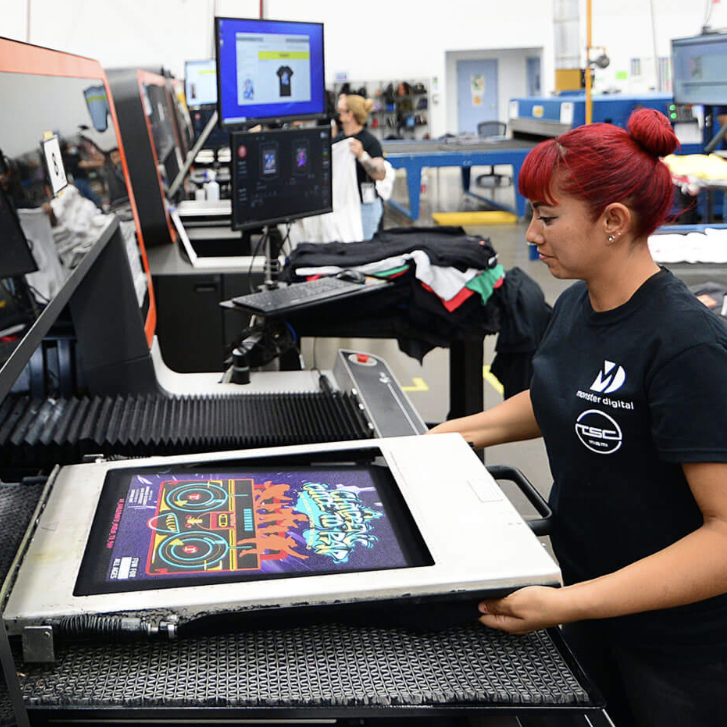
For instance, Monster Digital Inc. operates as a premier contract print manufacturer producing over 180,000 digital impressions every single day. Armed with a fleet of over 70 industrial-grade direct-to-garment (DTG) printers, (including 7 Kornit Apollo systems) they have the agility to serve everyone from massive global brands to local sports teams. Their continuous capital investment in technology allows them to maintain stability and exceptional quality across a fragmented supply chain.
Similarly, Canadian firm Printeez handles enormous volume, producing up to 350,000 units in bulk each month and fulfilling 57,000 on-demand units during peak seasons. By building proprietary software that seamlessly integrates with white-label e-commerce stores, Printeez demonstrates how essential backend automation is for agile fulfilment.
Traditional screen printers are also making the leap. T-Formation, a company that historically relied on high-volume analogue screen printing, faced a massive shift in customer behaviour post-COVID. Buyers wanted smaller, highly mixed orders. By integrating Kornit digital technology alongside traditional screen presses, they transformed their business model. They can now efficiently process anything from a single bespoke garment to orders of hundreds of thousands, unlocking a previously untapped market segment.
Disrupting Traditional Markets with Advanced Technology
To support this massive industry shift, manufacturers require hardware that can keep pace with evolving consumer expectations. Kornit Digital has consistently answered this call by launching systems that challenge outdated manufacturing paradigms.
The Apollo Effect
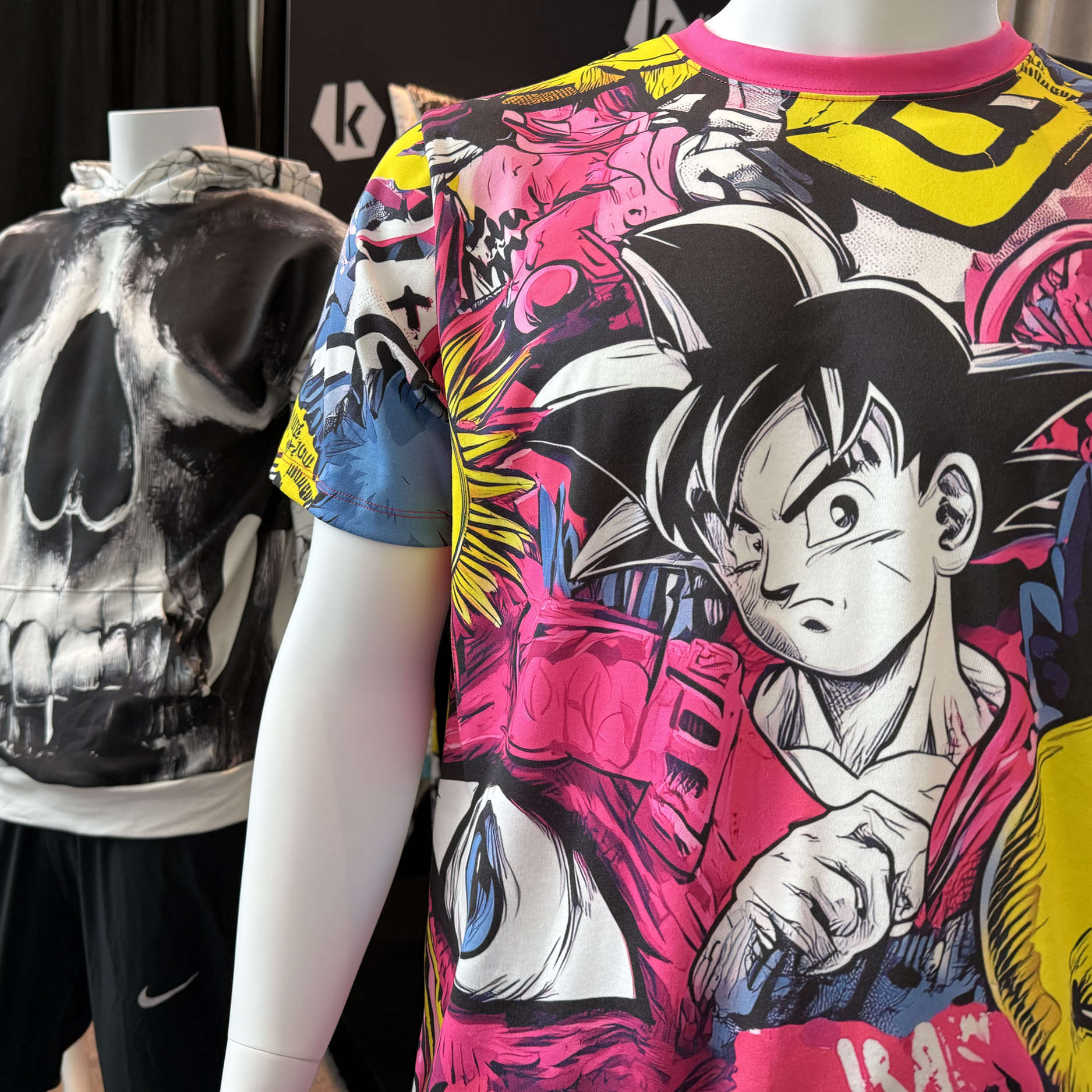
The Kornit Apollo system represents a groundbreaking leap for the screen-printing industry. Capable of printing approx 350 units an hour, it addresses the critical pain points of traditional screen setups, such as lengthy downtimes and inefficient short runs. This technology allows high-capacity decorators to manage high-mix, low-volume production with incredible efficiency.
Unveiling the Atlas MATRIX
Managing short and mid-run jobs on complex fabrics has always been a hurdle for decorators. To solve this, the Atlas MATRIX was introduced as a unified digital production system offering complete flexibility across cotton, polyester, and blended fabrics. It features the proprietary Karbon Shield technology, a vital protection layer that prevents dye migration on challenging deep-dyed and sublimated polyesters.
By supporting both direct printing and transfer on film without compromising durability or quality, the Atlas MATRIX gives creators total design flexibility. It also includes specialised ink configurations - such as neon for high-impact sports apparel and red/green setups for high-end fashion brands.
Expanding into Footwear and Technical Textiles
The push for innovation extends far beyond standard t-shirts and hoodies. The technical textile and footwear markets demand exacting specifications, rigorous durability, and consistent performance.
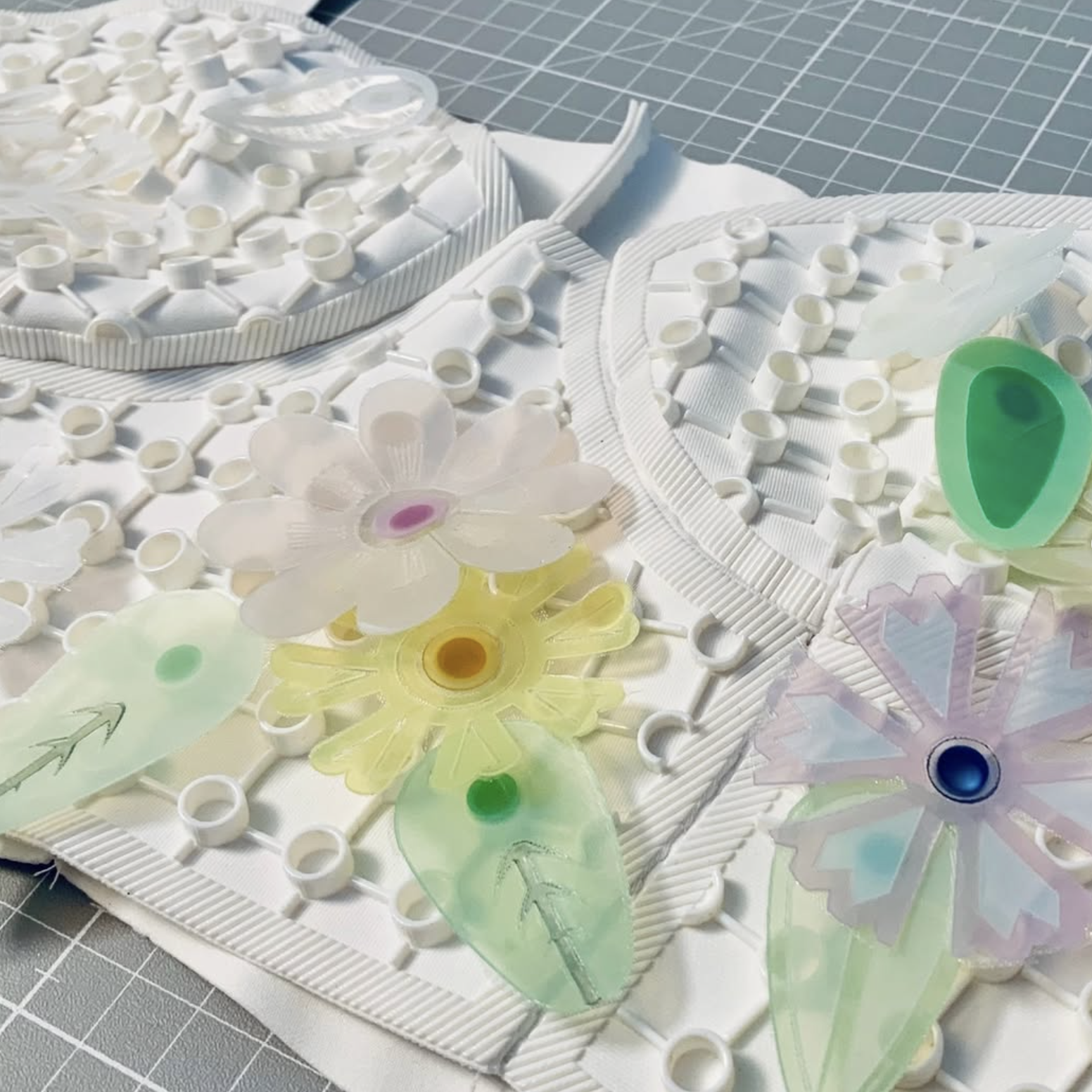
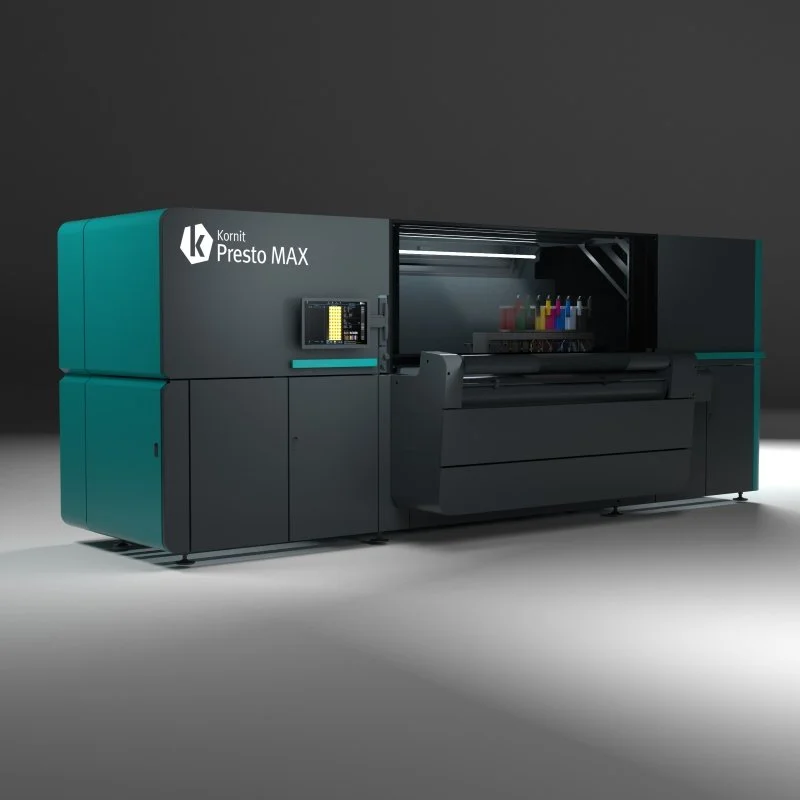
Kornit recently unveiled the Presto MAX PLUS, a state-of-the-art roll-to-roll system that expands digital manufacturing into entirely new categories. Debuting at Texprocess 2026, this system enables on-demand production for footwear uppers, automotive interiors, military camouflage, and high-performance sportswear.
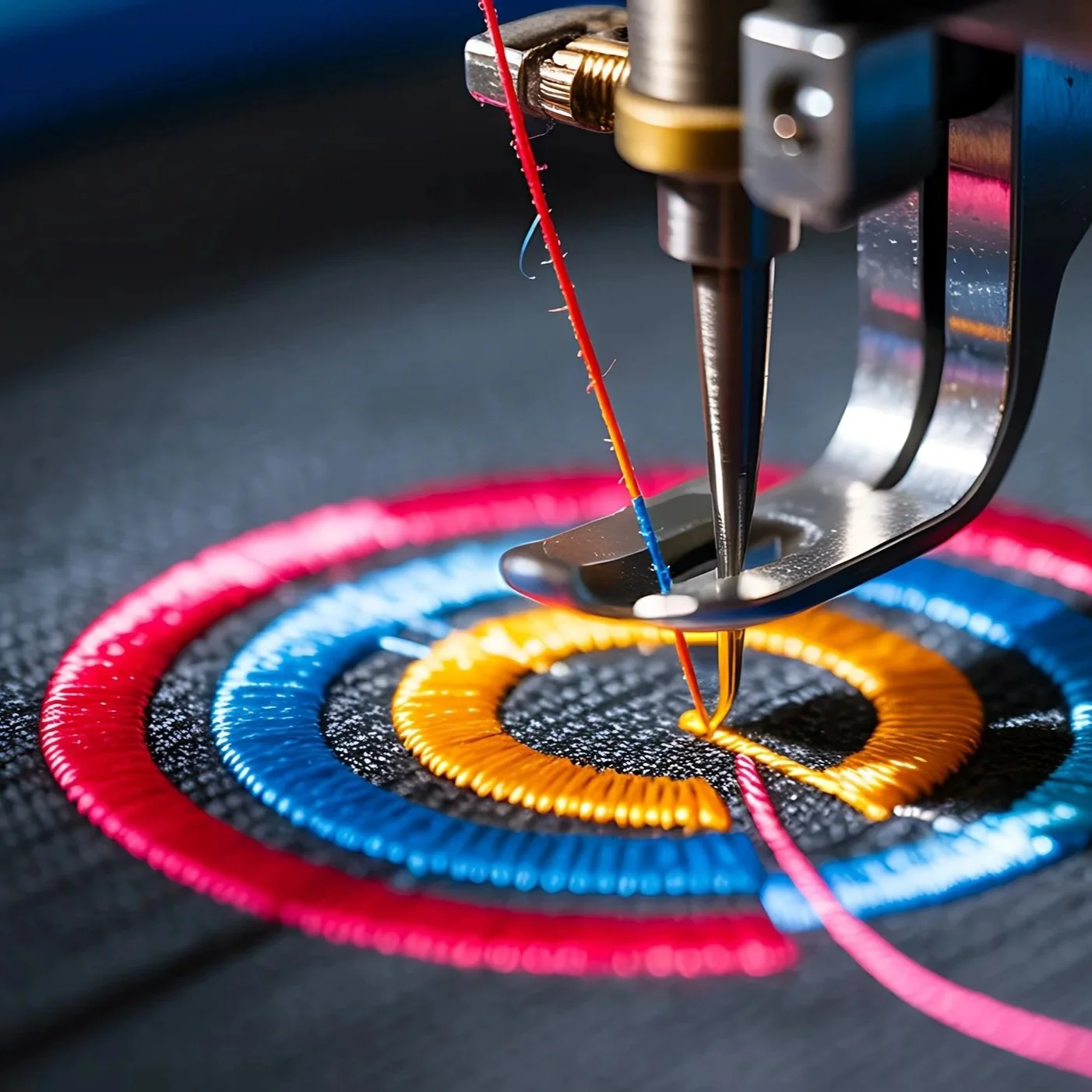
The system introduces DuraTech, a unique durability enhancer that delivers consistent resistance to wear, flex, and abrasion. Combined with patent-pending Precise Overprint technology, it intelligently adapts to material variability, ensuring accurate image placement even on complex or dimensionally unstable pre-knitted substrates.
Additionally, this single-step system is completely water-free. It eliminates the need for pre- or post-washing, drastically reducing energy consumption and environmental impact. At the Konnections event, partners like Greentex showcased how these digital systems apply flawlessly to both natural fibre fabrics, and synthetic - proving that producers can achieve brilliant colour fastness and precision while remaining committed to sustainable, recycled materials.
In a recent interview Giovanni Pizzamiglio from Kornit Digital about the new Presto Max Plus.
Giovanni explains how Kornit is evolving from fashion into technical textiles, using a new abrasion-resistant polymer “DuraTech” to create durable, stretchable prints for sportswear, footwear, and even military camouflage.
They discuss replacing complex analog processes with single-step digital printing, precise print positioning on woven fabrics, and new possibilities for interior décor, performance wear, and advanced protective textiles.
WATCH NOW »

Redefining the Status Quo for the On-Demand Era
The apparel decoration industry is decisively moving away from isolated, analogue production tools toward connected digital manufacturing environments. Kornit’s strategic acquisition of workflow automation platforms like PrintFactory further highlights this transition, connecting demand generation, production workflow, and global fulfilment into one continuous digital ecosystem.
These technical advancements offer incredible commercial opportunities for businesses that specialise in print on demand. By adopting these solutions, manufacturers can eliminate minimum order quantities, reduce media and ink waste, and respond instantly to market trends.
Kornit’s unwavering commitment to transformative technology continues to disrupt the status quo. They are providing the essential digital infrastructure the fashion industry needs to become truly agile and sustainable. For business leaders and innovators ready to capture the future of apparel manufacturing, the path forward is clear: